

Janna Salokangas

Last week, I got a LinkedIn message from someone who'd just been laid off. "They said it was AI," she wrote. "But I don't think that's the whole story. Something else is happening here, and I can't figure out what." She's right. Something else is happening. And it's not the story the headlines are selling.
Here's what you've probably heard: AI is eliminating jobs at an unprecedented rate. Millions of workers are being replaced. The robots are coming for everyone. Here's what the data actually shows: AI accounts for about 55,000 job cuts in the U.S. this year, roughly 4.5% of total layoffs. Let me say that differently. Out of 1.17 million people who lost their jobs in 2025, only about 55,000 were laid off because of AI. The other 1.1 million? That's a different story. And it's the one we need to talk about.
The story we're not telling
I run an AI company. I believe deeply in what this technology can unlock. I've seen it firsthand. The moment people understand what AI can now do and more importantly, who they can now become, their faces light up. That's the promise of this moment. But I also sit in rooms where workforce decisions are actually made. And here's what I hear: it's almost never, "AI is ready to replace this role." It's usually: demand is soft. Investors want efficiency. Margins are under pressure.
AI just happens to be a convenient explanation. When layoffs are announced alongside AI initiatives, it sounds strategic. Inevitable. Future-focused. Look closer, and the drivers are familiar: slowing sales, cost cutting, investor pressure. AI didn't cause those layoffs. It gave them better PR. And that's the story we keep telling while missing the far more hopeful one about what AI actually makes possible for people, when we choose to invest in them.
This moment is a transition. Every major technological shift first freezes hiring, then reorganizes value, then creates new categories of work. We are in the freeze phase, not the replacement phase. The organizations that win won't be the ones cutting fastest. They'll be the ones upgrading humans fastest.
The economy nobody's talking about
Here's another number that matters. U.S. GDP growth in early 2025 looked strong on paper. But strip out spending on data centers and AI infrastructure, and the economy was essentially flat. Think about that. The "growth" is largely coming from building massive server farms. Yes, construction creates jobs — sometimes 1,500 to build a single data center. But once it's operational? About 100 long-term jobs. GDP goes up. Headlines celebrate the AI boom. And millions of workers wonder why none of that growth is reaching them.
At the same time, something quieter is happening. Companies are posting fewer jobs. Especially entry-level roles. Especially for recent graduates. If you're early in your career, the market feels tight, not because AI replaced you, but because companies paused hiring while they "figure things out." It's not automation. It's hesitation. And hesitation is temporary. Once companies understand what humans + AI actually look like in practice, hiring doesn't disappear — it changes shape. The next wave of jobs won't look like the last one. But they will require more judgment, not less.
What Wall Street wants
Here's the uncomfortable truth. Markets have started treating headcount reduction as a signal of good management. Fewer employees = lower costs = higher margins = stock price up. It doesn't matter if long-term capability suffers. It doesn't matter if productivity actually improves. AI gives executives cover. "We're investing in AI to drive efficiency." Translation: We're cutting costs, and AI makes it sound like strategy.
I've seen this pattern up close. And it's spreading. We're conflating short-term efficiency with long-term value. That's a dangerous mistake.
So what's actually happening?
Let me be very clear: People are not losing jobs primarily because of AI. They're losing jobs because the economy is under strain. Demand is slowing. Companies are restructuring. Investors are pushing for cost cuts. AI is real. It will transform work. But right now, it's mostly being used to explain decisions driven by older forces: profit pressure, uncertainty, and shareholder expectations.
The AI layoff narrative is a myth. The pain people are feeling is not. If we keep misdiagnosing the problem, we'll keep missing the solution.
What human continuity actually means here
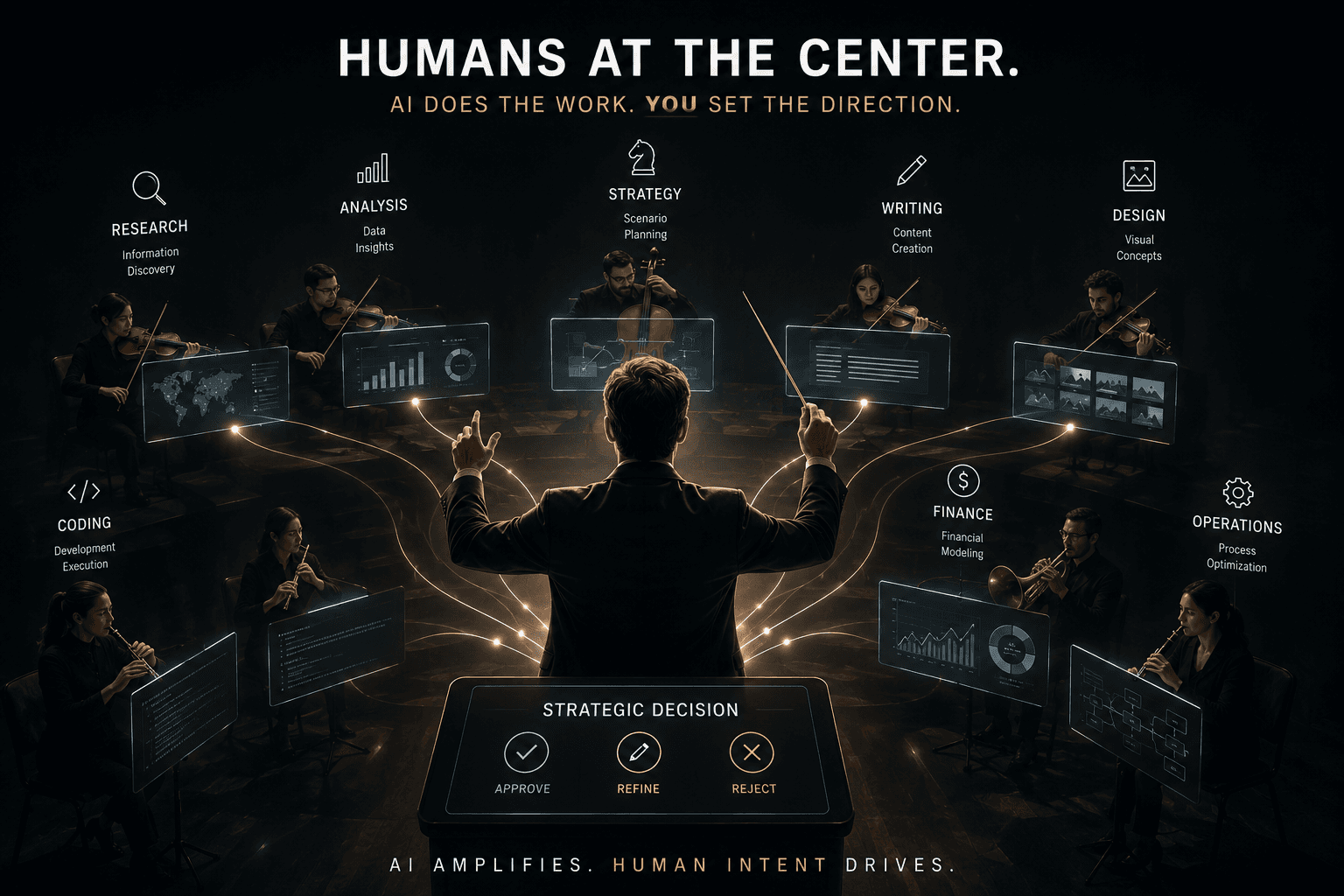
This is where my work gets complicated and important. I run an AI company. My clients are the leaders making these decisions. And I care deeply about the people affected by them. That double vision matters. The answer isn't to slow AI down. And it's not to deny disruption. AI is the most powerful growth engine humanity has ever built. When designed well, it frees humans from low-value work, accelerates learning, and expands what people are capable of doing. Real economic value won't come from fewer humans — it will come from more capable ones.
So the real shift is simple: We must change what we optimize for. Right now, we celebrate GDP growth even when people fall behind. Human continuity means asking better questions: How do we tie economic success to expanded human capability, not just cost reduction? How do we use AI to create higher-value work instead of eliminating roles? How do we sustain employment, learning, and adaptability — not just short-term efficiency? How do we measure value beyond headcount reduction and quarterly margins?
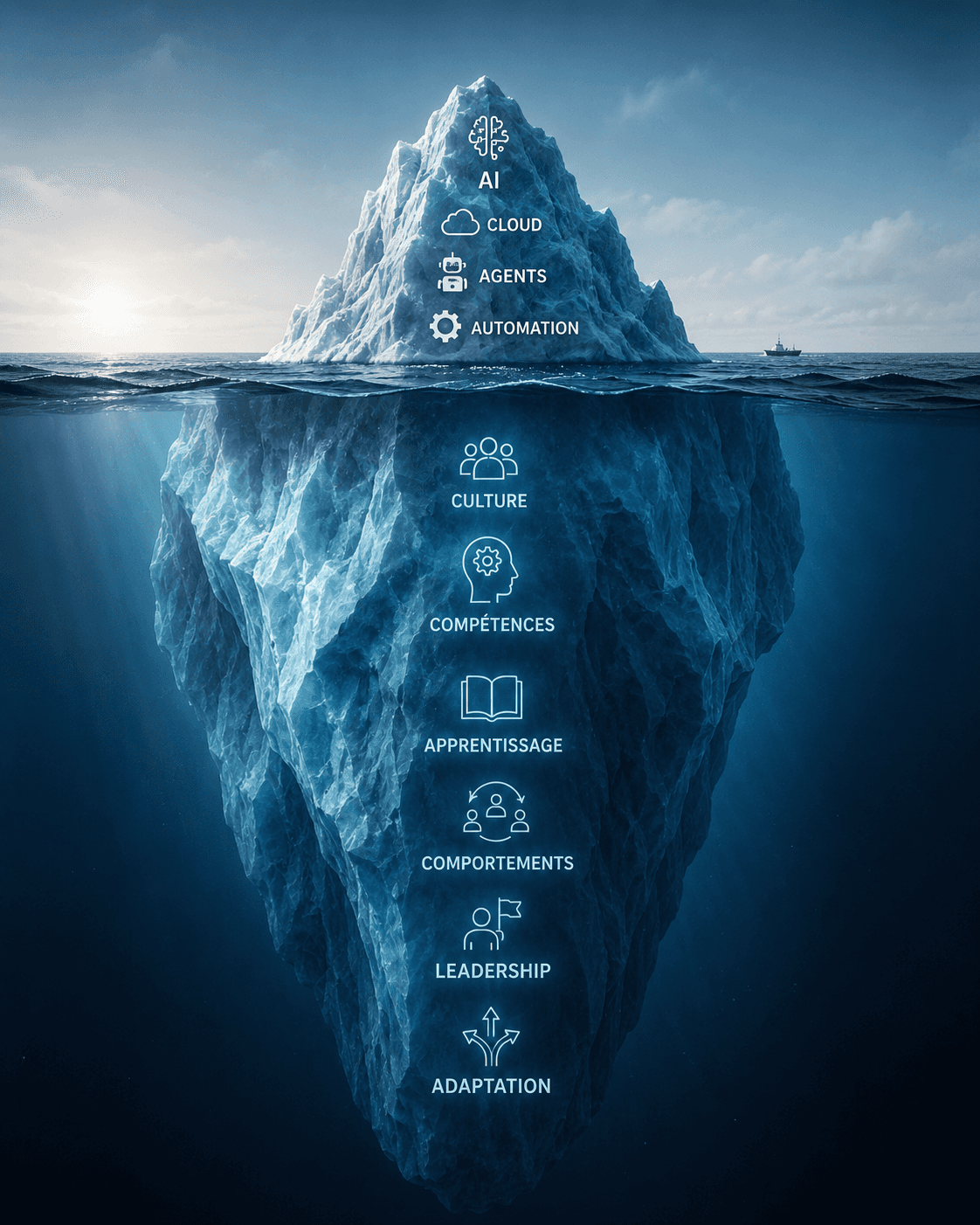
The organizations that win in the AI era won't be the ones with the fewest people. They'll be the ones with the most empowered humans working alongside intelligent systems to reach outcomes previously impossible. AI doesn't remove the need for people. It raises the level at which people operate. Routine execution declines. Interpretation, coordination, decision-making, and accountability expand. That isn't job loss. That's job elevation — if we prepare people for it.
What this could look like in practice
1. Invest in retraining that actually works. Not "learn to code." Real, continuous upskilling that builds what AI amplifies: judgment, context, creativity, systems thinking, and human–AI collaboration. The goal isn't to compete with machines. It's to become more capable because of them.
2. Use AI to expand human productivity, not shrink the workforce. The real economic upside of AI comes from enabling people to do higher-value work faster — not from reducing headcount. Organizations that win will be the ones that turn AI into a force multiplier for human output, innovation, and problem-solving.
3. Shift from cost efficiency to capability growth. Efficiency matters but growth comes from capability. AI should help organizations scale intelligence, accelerate learning, and unlock new markets, products, and services. That's how demand grows and how employment stays strong.
4. Build for abundance, not scarcity. Exponential technologies don't just reduce costs. They lower barriers, democratize access to intelligence, and unlock participation at scale. When more people can create, decide, and contribute at a higher level, the economy expands — not contracts.
The real risk
I'm not worried AI will replace everyone. AI can free humans into higher-level judgment, creativity, and decision-making. That's the upside.
What I'm worried about is this: I'm worried we're wasting human potential because we're not building the right skills, judgment, and confidence people need to work alongside intelligent systems. I'm worried we'll use AI as an excuse to hollow out the labor market for reasons that have nothing to do with technology. I'm worried we'll celebrate growth driven by data centers while ignoring the workers left behind. I'm worried we'll confuse efficiency with value and treat people as costs instead of capacity. And I'm worried that by the time we notice what we've lost, we won't know how to rebuild it. Because the real risk of the AI era isn't replacement. It's a misdesign of skills, systems, and priorities that wastes human potential.
An honest question
If AI accounts for 4.5% of layoffs, but we blame it for far more: what does that tell us? It tells me we're looking for a simple story in a complex moment. It tells me that "AI made us do it" is easier than admitting economic strain, structural pressure, and short-term incentives. And it tells me that getting the diagnosis right matters, because without it, the treatment will fail.
I don't have all the answers. But I know this: Human continuity doesn't come from resisting technology. It comes from using exponential technology to expand what humans are capable of. AI gives us leverage to learn faster, create more, and solve problems at a scale we've never had access to before. The opportunity isn't fewer people. It's more capable people. That means redefining success to include human dignity, employment, and growth — not just efficiency. Not because it's kind. Because it's how growth and sustainability is created. An economy that only works for capital isn't actually working at all.
The real question isn't whether AI will change work, it will. The question is whether we use it to shrink opportunity or expand it. The best-case future is clear: smaller teams creating exponentially more value, humans directing systems instead of feeding them, work shifting from repetition to responsibility. Not fewer humans in the economy, more capable humans inside it. This is the greatest opportunity of our lifetime — but only if we act now.
What do you think? Are we blaming AI for layoffs that have deeper causes? And if so, what would it look like to design a response that unlocks human potential instead of sidelining it?
I'm still working through this. I'd love to hear where you land.
About