

Janna Salokangas

Knowing when, where, and how to use AI to get real results, and staying the one in charge.
“Will AI take over your job? Yes. And that can be the best thing that ever happens to your career, if you know how to use it. Let AI take over where you can’t add value. Free yourself for the work only you can do.”
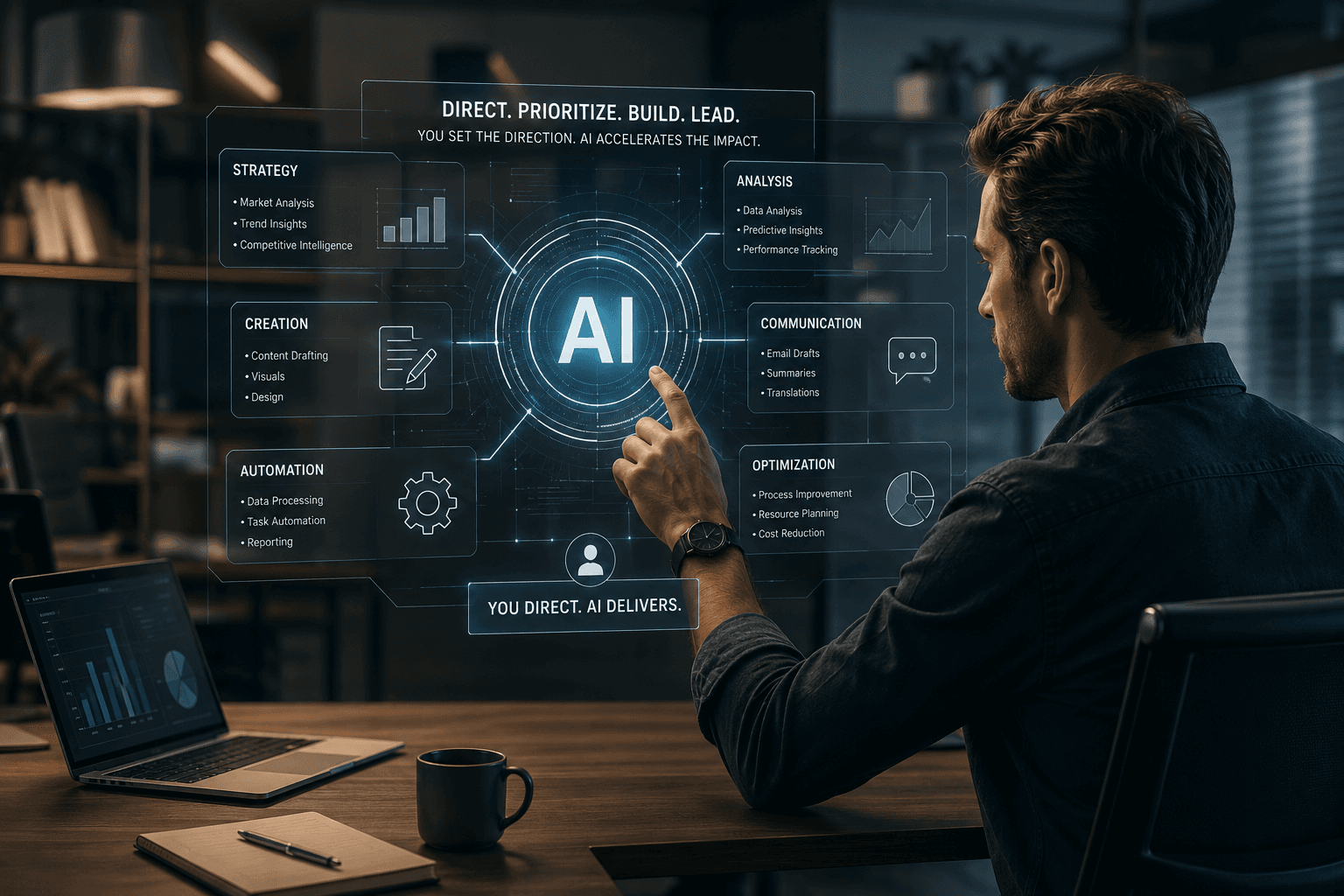
Most people are using AI. Very few are using it well.
That is not a criticism. It is an observation about where we are at this moment. The tools are available. The access is there. But access is not capability. And using AI is not the same as directing it.
AI Power is the first of the Five HAPI Powers (Mia’s Human AI Potential Index) and the most foundational. It is not about how much AI you use. It is about how well. Whether you are getting real results from it. Whether you are still the one in charge.
AI Power is a mindset before it is a skill set.
Most people treat AI as a tool they pick up when they need it. That is the wrong frame.
The professionals who build real AI Power have made a different shift. They have trained themselves to think differently, to look at every task, every workflow, every decision and ask: where could AI make this faster, deeper, or better? That question becomes automatic. A habit of mind. A lens they carry into every room.
That is the mindset shift. And it changes everything. Because once you start seeing AI opportunities everywhere in your work, you stop using AI occasionally. You start building with it deliberately, continuously, compoundingly.
AI is not a skill you learn once. It is a way of thinking you develop over time. And like every powerful way of thinking, it has to be built intentionally.
Start with the problem, not the tool.
Here is what we see constantly inside organisations: people open an AI tool and ask themselves, what can I do with this? That is the wrong question. And it is why so many AI experiments produce impressive demos and disappointing outcomes.
The right question is: where is the real pain in my work? What takes too long? What drains your energy? What slows your team down? What keeps getting pushed to Friday and never done? Start there. Find the pain point. Then ask whether AI can help you solve it.
That is AI Power in practice. Not curiosity about the technology. Clarity about the problem.
“A decade ago, this took a team. Today, it takes you and AI. The gap between those who understand this and those who don’t is no longer a skills gap. It is an exponential gap, and it is opening faster than most people realise.”
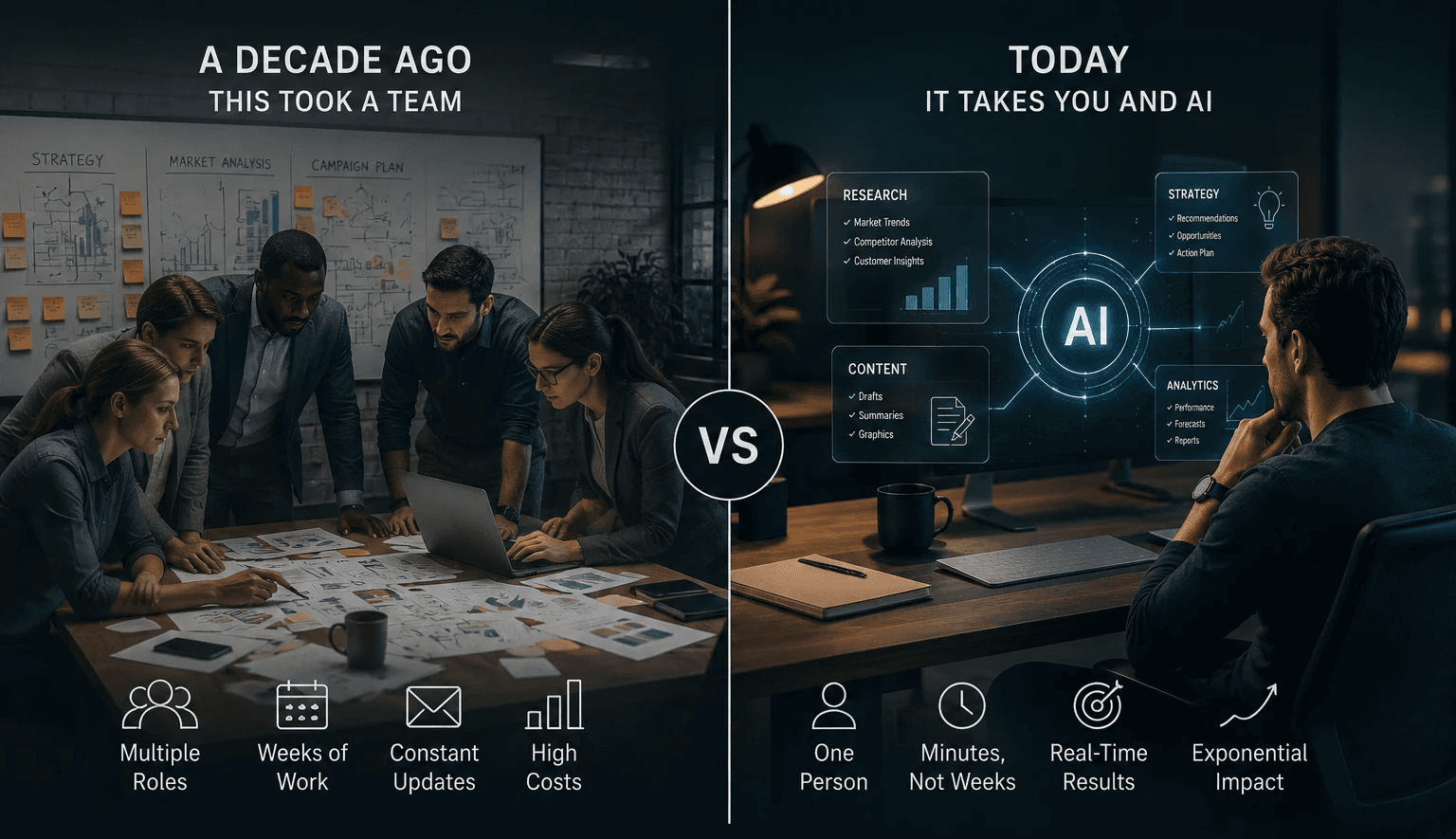
A leader who uses AI to cut a two-hour research process to twenty minutes and then uses those ninety minutes to think more deeply, lead more effectively, and make better decisions is not just more productive. They are more powerful. Now multiply that across five workflows. Ten. An entire way of working. That is not incremental improvement. That is transformation. Human judgment, amplified by AI capability, built into how you operate every day. Neither alone is enough.
The gap is not skill. It is intent.
When we assess AI Power through HAPI, the gap we find most often is not technical. People know how to use the tools (somewhat). What they have not done is get deliberate about why.
They are using AI reactively because it is there, because it is fast, because everyone else seems to be. But reactive use produces reactive results. Speed without direction is just noise.
The professionals who build real AI Power do something different. They identify the two or three places in their work where AI creates the most leverage. They build simple, repeatable workflows around those use cases. And they protect the parts of their work where their human judgment is the whole point, where no model can replicate what they bring.
That combination, knowing where to use AI, knowing where not to, and staying the author of the outcome is what separates AI users from AI leaders.
“The gap between a professional who uses AI intentionally and one who doesn’t is no longer a productivity gap. It is an exponential gap. And it widens every month.”
The human in the equation is not optional.
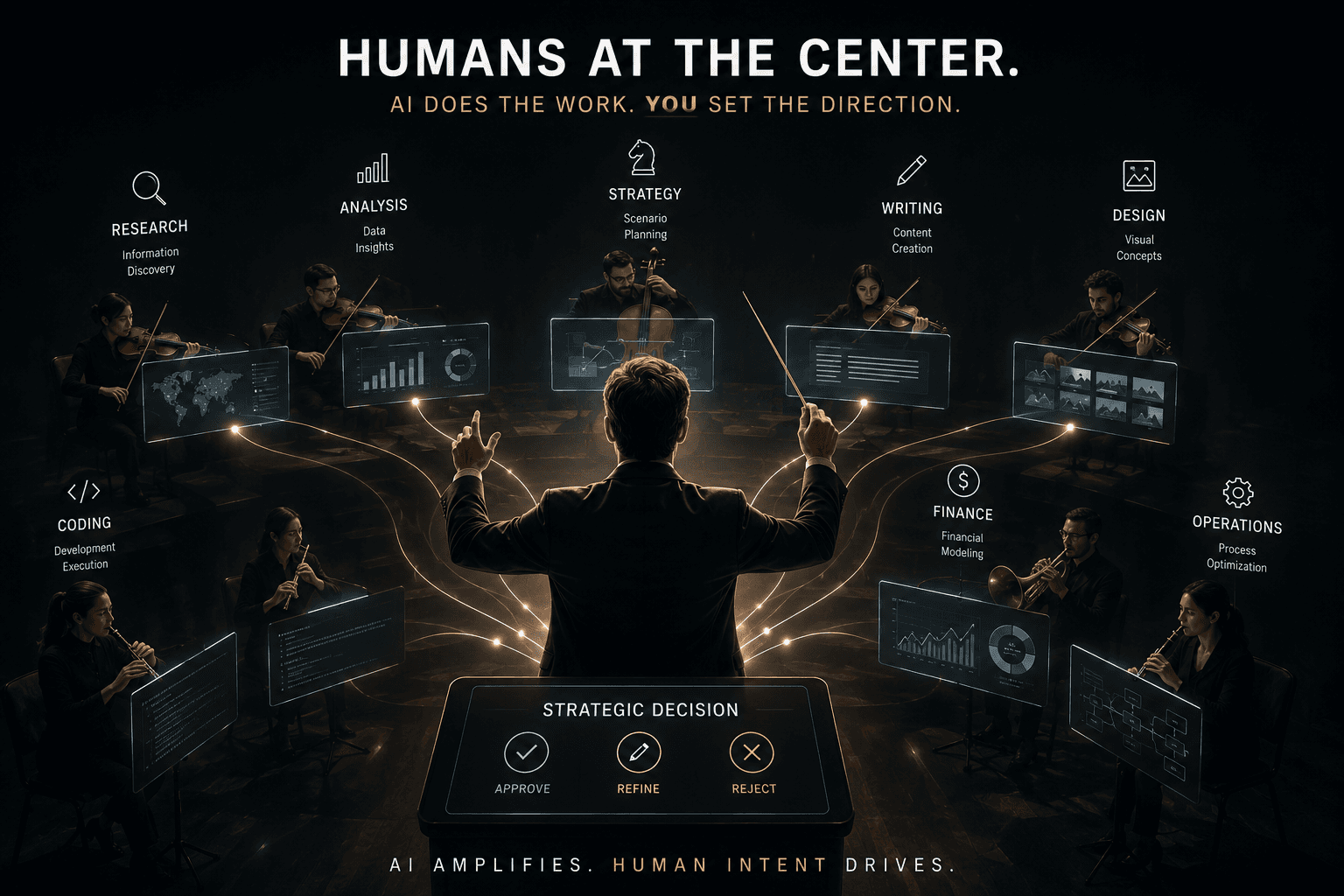
There is a version of AI adoption that looks productive but is actually dangerous. It is the version where the human quietly steps back. Where AI does the drafting, the analysis, the synthesis and the human reviews, approves, and sends.
It feels efficient. It can be, for a while.
But something erodes. The thinking muscle that used to be your edge. The ability to hold complexity, to see what others miss, to produce something that is distinctly and unmistakably yours.
AI does not replace that. It amplifies it but only if it is still there to be amplified.
The strongest AI Power I have seen in professionals is not the heaviest use. It is the most intentional use. People who know exactly what they are bringing to the collaboration and exactly what they are asking AI to bring. People who use AI to do more of what matters, and protect the capability that makes them irreplaceable.
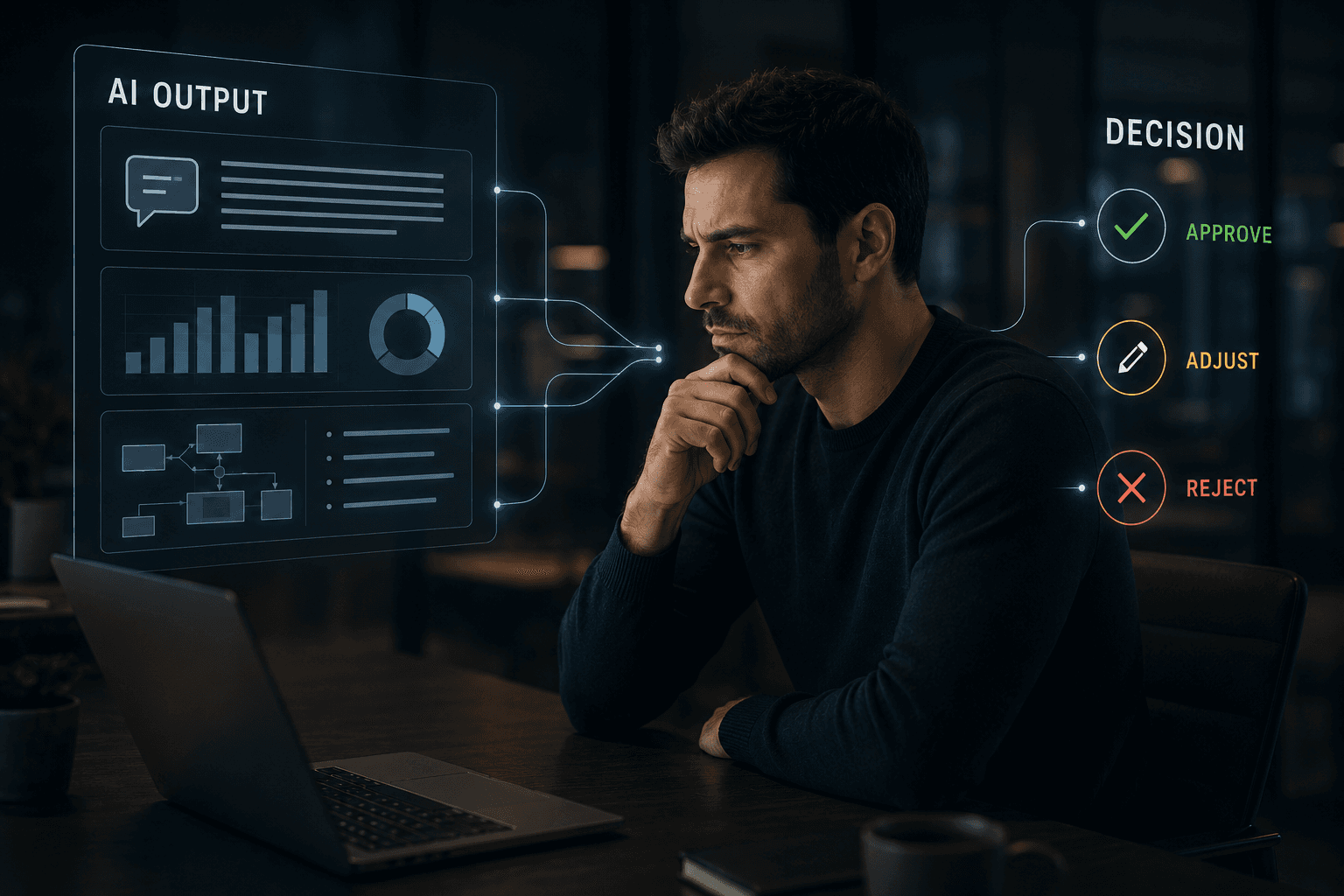
That is the winning combination. Human clarity directing AI power. Not one or the other. Both, together, in the right proportion.
“The most valuable person in any room is no longer the one with the most information. It is the one who knows what to do with it, and has AI to move at a speed no human alone can match.”
Where do you actually stand?
Most people have never been asked to think carefully about their relationship with AI. They have been told to use it more, use it faster, use it everywhere.
But the question that actually matters is simpler: is AI making you more powerful?
Not just faster. More powerful. More capable. More distinctly you because of what you bring to AI, not in spite of it.
If you cannot answer that question clearly, that is the starting point. Not a new tool. Not another training. Clarity about where you are, and what needs to change.
That is what HAPI is built to give you.
Take the HAPI Individual Assessment
Exploring AI Power across your organisation? Let’s talk.
About