

>
>
Multimodal AI: What Happens When Your AI Can See, Hear, and Read at the Same Time

Mia Editorial Team
For most of the past decade, enterprise AI was single-modal. A text model processed text. An image classifier recognized objects. A speech system transcribed audio. Each system was powerful in its own domain, and each required separate infrastructure, separate integration, and separate workflows.
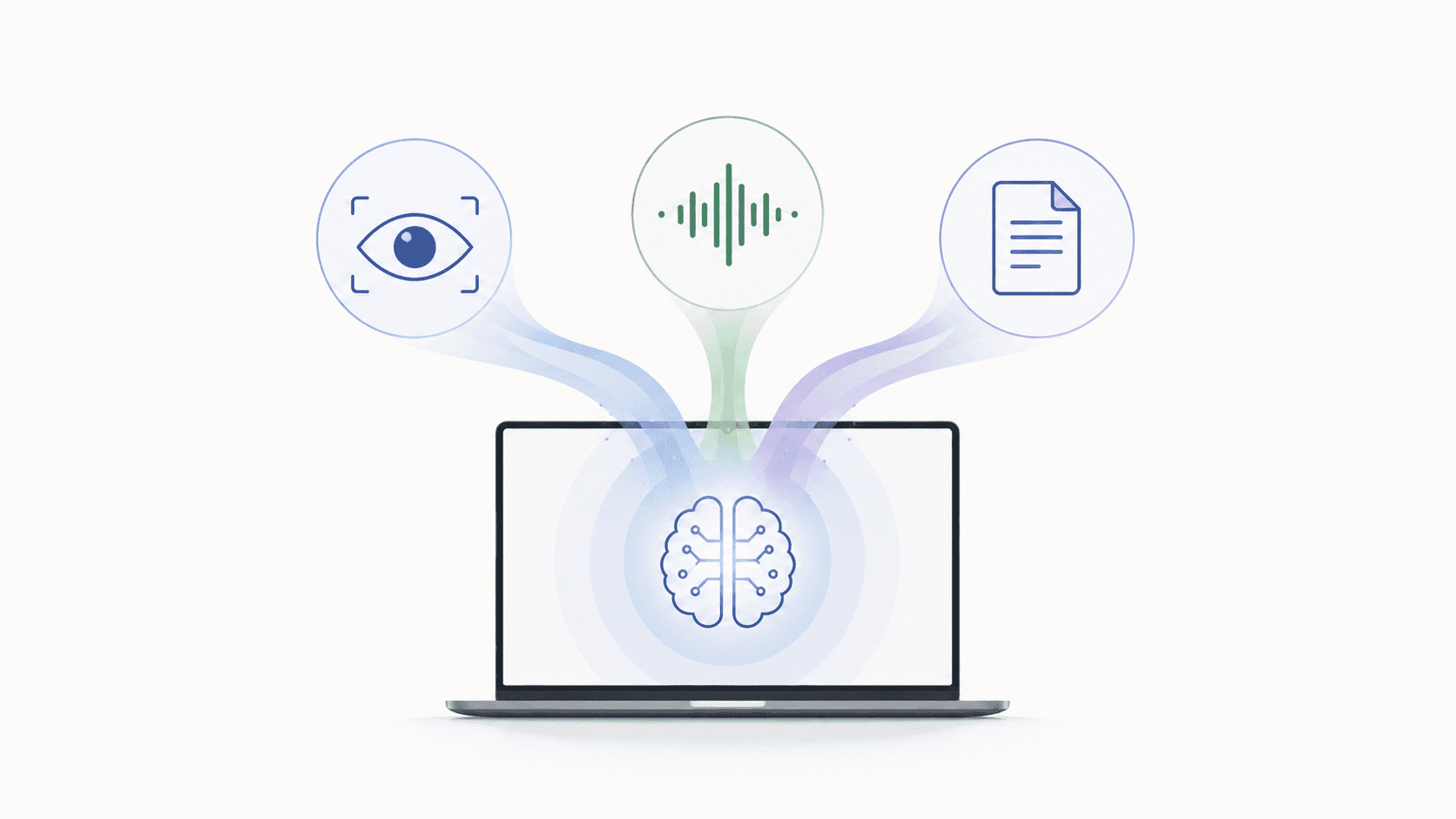
That architecture is changing. Multimodal AI processes text, images, audio, and video within a single model call, reasoning across all of them simultaneously rather than handling them in sequence. The business implication is more significant than it might first appear.
What multimodal AI actually means in practice
The clearest way to understand the shift is through a concrete example. A text-only model can answer the question: "What is the return policy for this product?" A multimodal model can answer: "This customer uploaded a photo of what they received. Is it damaged? If so, which return policy applies?" (Orange Mantra, 2026).
The second question cannot be answered from text alone. It requires simultaneous reasoning across an image and a policy document. That is what multimodal AI enables, and it describes a category of business problem that was simply not solvable with earlier AI architectures.
In 2026, the leading multimodal models — GPT-4o, Gemini 3.1 Pro, and Claude Opus 4.7 — natively handle text, images, audio, and in some cases video, without requiring organizations to chain together separate specialized systems (Ortem Technologies, 2026). The friction of managing multiple AI systems for different data types is disappearing. What replaces it is a single system capable of working with whatever data a business process actually produces.
Where the highest ROI is showing up
The enterprise use cases generating the clearest returns from multimodal AI in 2026 cluster around three areas (Ortem Technologies, 2026):
Document intelligence is the highest-ROI application in most industries. Multimodal AI extracts structured data from invoices, contracts, forms, and mixed-format documents with 90%+ accuracy at a fraction of the cost of manual data entry. Legal, finance, insurance, and procurement teams are deploying this at scale.
Visual quality inspection is transforming manufacturing. Multimodal models detect defects on assembly lines in real time, flagging process deviations that text or sensor data alone would miss. The economic case is direct: fewer defective products reaching customers and faster detection of production issues.
Voice and screen AI assistants combine audio input with visual context in customer service and support workflows. A mid-size financial services organization that added audio sentiment analysis to its customer call processing improved churn prediction accuracy by 22% over six months, by capturing tone signals that text transcription systematically missed (Orange Mantra, 2026).
The convergence with agentic AI
The development that makes multimodal AI strategically significant for enterprise leaders in 2026 is its convergence with agentic systems. Earlier AI agents were text-only: they read instructions, called tools, returned text. The newest generation is multimodal-native. They can read screenshots, analyze images, parse charts, and act on what they observe across visual and textual interfaces (Lyzr, 2026).
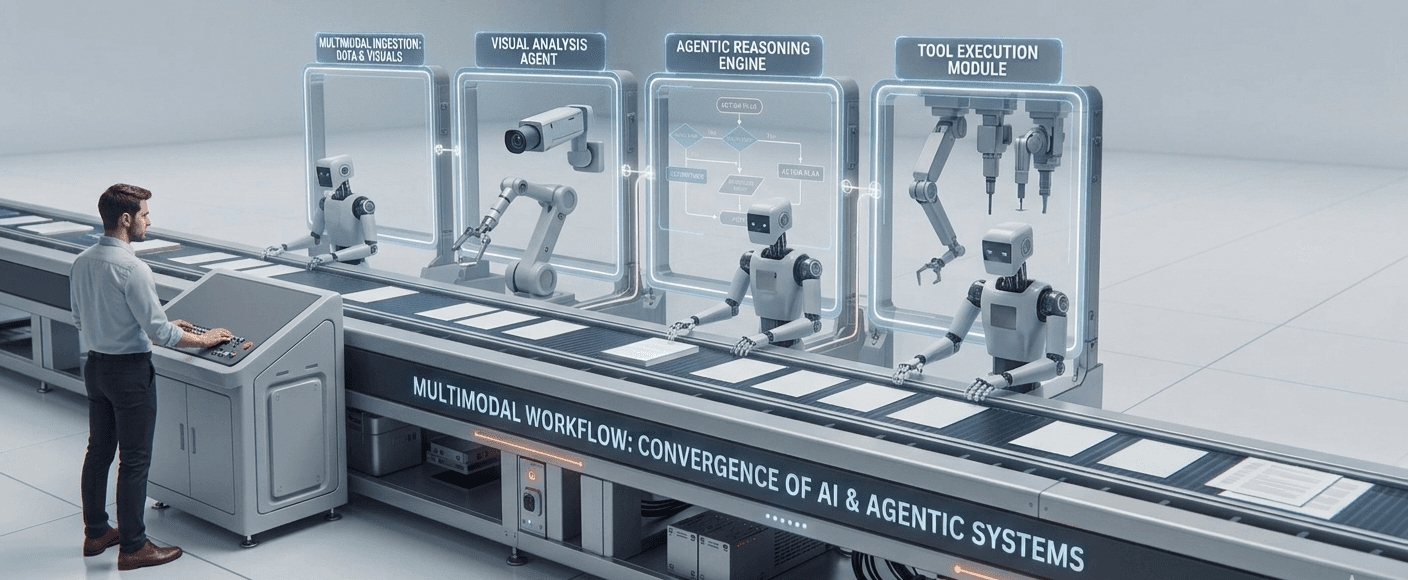
This convergence means that the organizations investing in multimodal AI workflows today are not just solving current business problems. They are building institutional capability that will compound in value as agentic systems mature. The teams that understand how to work with multimodal AI now will be better positioned to direct multimodal agents as those systems become mainstream.
What to consider before deploying
Multimodal AI is not appropriate for every use case, and treating it as a universal upgrade over text-only AI is a planning error that inflates costs without improving outcomes.
Video processing remains the most computationally expensive modality and the least mature for most enterprise applications. In 2026, Gemini 3.1 Pro leads on video understanding, while GPT-4o does not support video natively (Ortem Technologies, 2026). For organizations without clear video-specific use cases, video is not a recommended starting point.
The more practical principle is selective multimodality: use multimodal AI where the data genuinely is mixed and reasoning across modalities adds value, and use text-only models where they are sufficient and cheaper (Lyzr, 2026). Organizations with the highest ROI from multimodal AI are those that matched the modality to the business problem, rather than deploying multimodal capability across the board.
Reliability across modalities also requires attention. A model that performs well on text may underperform on images or audio, and errors do not distribute evenly across modalities. Enterprise deployments need observability that catches mode-specific failures before they affect business outcomes.
The organizational implication
The shift to multimodal AI does not change what effective AI adoption requires. It raises the bar for it. Employees working with multimodal systems need to understand not just how to prompt a text model, but how to structure inputs across data types, evaluate outputs that draw on multiple modalities simultaneously, and exercise judgment when a model's reasoning across modalities produces unexpected results.
That is a meaningful capability gap in most organizations today. Closing it requires the same structured ai upskilling and applied ai training for employees that effective AI adoption has always required — applied now to a more complex set of tools.
The technology is moving fast. The human capability to use it well is what determines whether it creates value.
If you want to understand where your workforce stands today, that is where Mia AI starts.
Sources
Lyzr. (2026, June 5). What is multimodal AI: Enterprise guide 2026. Lyzr. https://www.lyzr.ai/blog/what-is-multi-modal-ai/
Orange Mantra. (2026, June 5). Multimodal AI development: Complete enterprise guide for 2026. Orange Mantra. https://www.orangemantra.com/blog/multimodal-ai-development-guide/
Ortem Technologies. (2026, May 17). Multimodal AI for business 2026: Text, voice, and vision applications. Ortem Technologies. https://ortemtech.com/blog/multimodal-ai-business-applications-2026
About