


Mia Editorial Team

On August 2, 2026, most organizations using AI through a subscription, an integrated tool, or an internally built system became subject to enforceable obligations under the EU AI Act for the first time.
That date passed quietly for most enterprise leaders. It should not have.
The EU AI Act is the world's first comprehensive AI legislation. It entered into force in August 2024 and has been applying in phases since. August 2, 2026 marked the point at which transparency obligations under Article 50, enforcement powers over general-purpose AI, and the full penalty regime became active for the vast majority of organizations operating in or selling into European markets (Cloud Captains, 2026).
And yet 78% of organizations had not taken meaningful steps toward compliance as of April 2026 (Vision Compliance, as cited by Responsible AI Labs, 2026). More than 50% lack a basic AI inventory. 40% of AI systems have unclear risk classification.
What the regulation actually requires right now
The most common misunderstanding is that the June 2026 Digital Omnibus on AI, which delayed the high-risk system compliance deadline from August 2026 to December 2027, made August 2 a non-event. It did not.
The Omnibus deferred one specific obligation: compliance for standalone high-risk AI systems under Annex III. What it did not defer is what affects most organizations immediately, the transparency requirements under Article 50 (Lumenova AI, 2026). Any organization deploying AI chatbots or generating synthetic media must now disclose to users that they are interacting with AI. Failure to comply carries significant financial penalties.
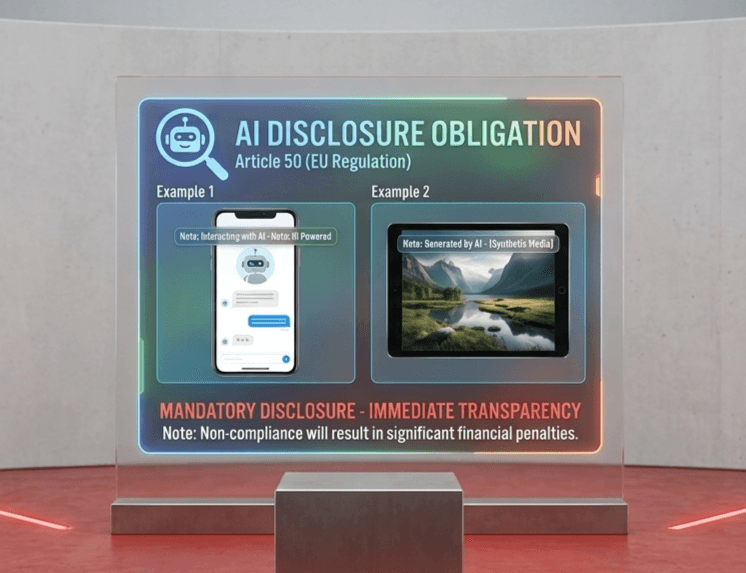
For enterprise leaders, the practical implication is direct: even if your organization does not deploy high-risk AI systems under the Act's classification, the transparency rules apply now. The question is not whether you are affected. It is whether you know exactly how.
The compliance gap is a business risk, not just a legal one
EY's recent global survey found that non-compliance with AI regulations is now the most commonly cited AI risk among C-suite leaders (SIG, 2026). The financial exposure is significant: compliance costs for large enterprises are estimated at $8 to $15 million, third-party certification per AI system runs $50,000 and above in regulated industries, and technical documentation built from scratch requires a three to six month timeline (Responsible AI Labs, 2026).
But the cost of non-compliance runs in the same direction. The EU AI Act's penalty regime scales with organizational size: up to 35 million euros or 7% of global annual turnover for violations involving prohibited AI practices, and up to 15 million euros or 3% of turnover for violations of other obligations.
The organizations that will emerge from this regulatory environment in the strongest competitive position are those already building audit-ready AI governance into their operations, not those scrambling to document what they deployed two years ago.
Beyond the EU: a global regulatory shift
The EU AI Act is the most comprehensive framework, but it is not the only one. The United States has introduced sector-specific AI guidance across financial services, healthcare, and employment. The UK is advancing its pro-innovation AI regulatory approach. Canada, Singapore, and Japan have each published national AI governance frameworks in the past 18 months.
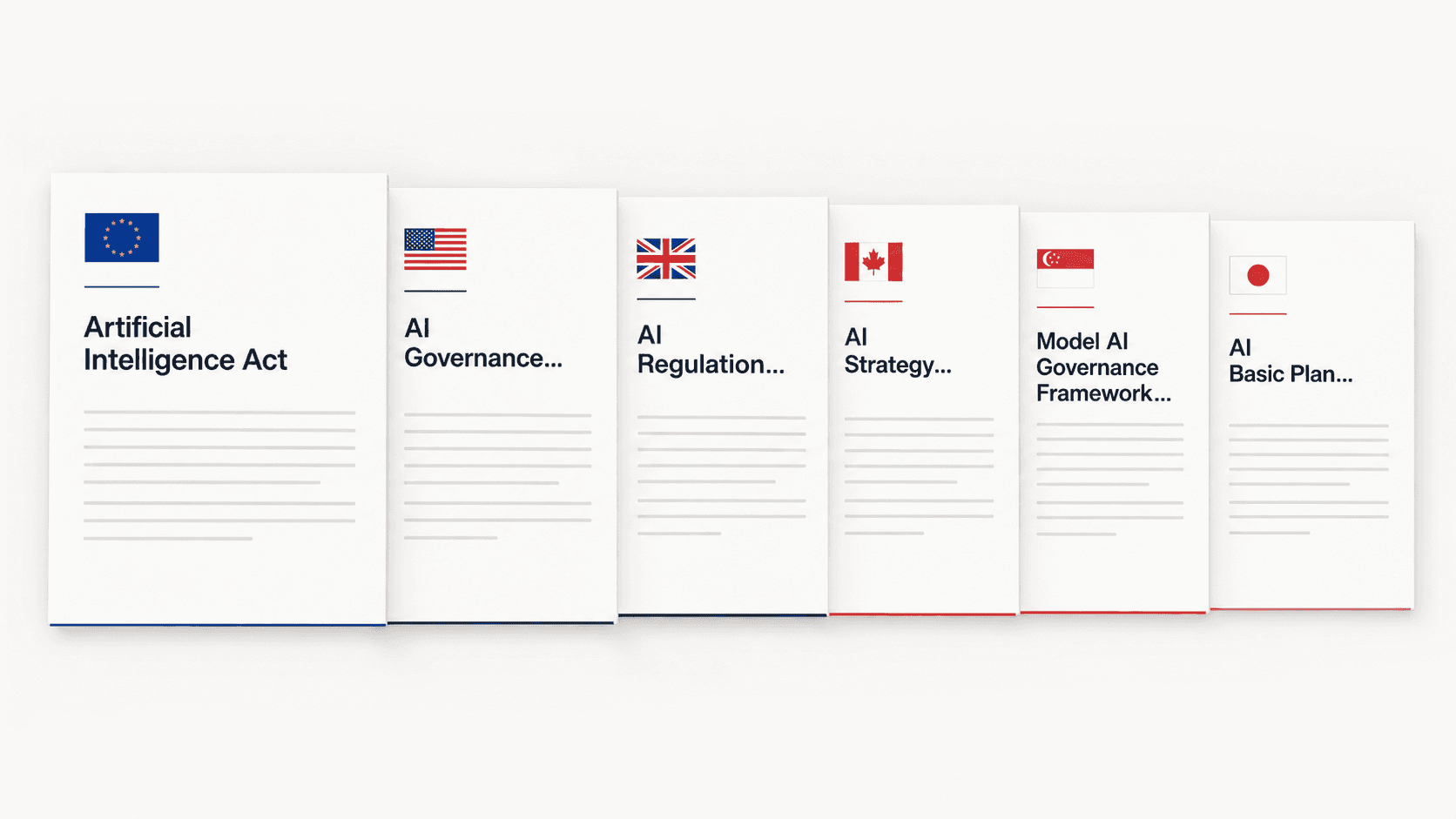
For organizations operating across multiple jurisdictions, the practical reality is that no single compliance framework covers everything. Travers Smith, advising enterprise clients on the Act, recommends treating the most stringent applicable regulations as a baseline and building upward from there (Travers Smith, 2026). That approach costs more initially. It costs significantly less than rebuilding governance architecture jurisdiction by jurisdiction as each framework matures.
What effective AI governance preparation looks like
The organizations best positioned to navigate the tightening regulatory environment share a consistent operating profile. They have conducted a full AI inventory, knowing exactly which systems are deployed, what data they process, and how outputs are used. They have classified each system against applicable risk frameworks. They have embedded human oversight checkpoints into workflows that carry regulatory or rights implications. And they have built AI governance training into their workforce development programs, not as a compliance module, but as a foundational capability.
That last point matters more than most organizations currently recognize. A governance policy that employees cannot interpret or apply in practice is not a governance policy. It is a document. The transparency requirements, the oversight obligations, and the incident reporting duties that the EU AI Act imposes all depend on a workforce that understands what they mean at the level of daily work.
For organizations ready to start, the starting point is not a legal review. It is knowing what AI you actually have, and whether your people know how to use it responsibly.
If you want to understand where your workforce stands on AI governance readiness today, that is where Mia AI starts.
Sources
Cloud Captains Team. (2026, July 10). The EU AI Act: Compliance guide for global businesses. Cloud Captains. https://cloud-captains.com/en/article/the-eu-ai-act-compliance-guide-for-global-businesses
Lumenova AI. (2026, July). EU AI Act news 2026: New deadlines and business impact. Lumenova AI. https://www.lumenova.ai/blog/eu-ai-act-delays-july-2026/
Responsible AI Labs. (2026, July). EU AI Act August 2026: Your compliance countdown. Responsible AI Labs. https://responsibleailabs.ai/knowledge-hub/articles/eu-ai-act-august-2026-compliance
Software Improvement Group (SIG). (2026, August). A comprehensive EU AI Act summary: August 2026 update. SIG. https://www.softwareimprovementgroup.com/blog/eu-ai-act-summary/
Travers Smith. (2026, May 27). The EU AI Act: The current state of play. Travers Smith. https://www.traverssmith.com/knowledge/knowledge-container/the-eu-ai-act-the-current-state-of-play/
About


Multimodal AI: What Happens When Your AI Can See, Hear, and Read at the Same Time