


Mia Editorial Team

Every government institution deploying AI has a set of principles. Fairness. Transparency. Accountability. Human oversight. The language is consistent across frameworks, from the OECD AI Principles to the EU AI Act to national AI strategies in more than 60 countries.
What is far less consistent is what those principles look like in practice, on a Tuesday afternoon, when a caseworker is reviewing an AI-generated recommendation about a citizen's benefits eligibility.
That gap between principle and practice is where ethical AI in the public sector either functions or fails.
The scale of the bias problem
Only 20% of organizations conduct formal bias testing on AI models currently in use. In the public sector, where AI systems are increasingly used to inform decisions about access to services, law enforcement risk scoring, and benefits eligibility, that figure has direct consequences for citizens.

Global enterprises reported approximately $4.4 billion in AI-related financial losses tied to compliance failures, flawed outputs, and bias issues in 2025. For public institutions, the losses are not primarily financial. They are civic: citizens denied services they are entitled to, individuals flagged by biased risk scores, communities subjected to discriminatory enforcement patterns.
55% of AI experts worry about biased AI decisions amplifying discriminatory outcomes. The concern is not theoretical. Documented cases of algorithmic bias in public sector AI span child welfare risk assessment, recidivism prediction, benefits fraud detection, and hiring in public employment. In each case, the bias was not visible in aggregate accuracy rates. It appeared in the distribution of errors across demographic groups.
Why principles do not automatically produce accountable practice
The challenge is structural. A widely articulated perspective emphasizes that generative AI should assist, not replace, human judgment, with accountability firmly placed on institutions rather than automated systems. That principle is sound. The mechanism for implementing it is what most institutions have not built.
Three gaps consistently appear between ethical AI principles and accountable practice in government institutions.
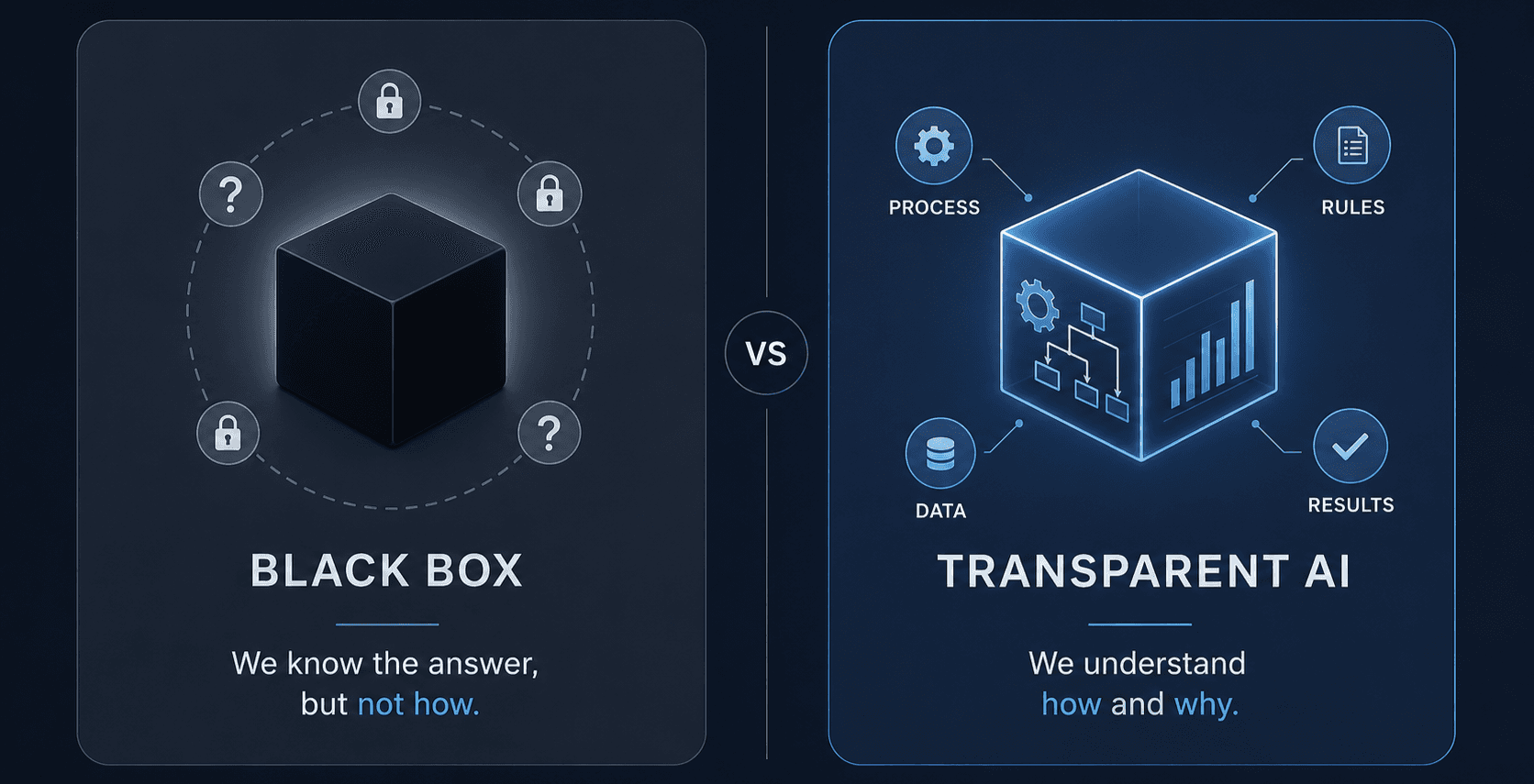
Transparency without explainability. Disclosing that an AI system was used in a decision is not the same as being able to explain why the system produced that output. Decision transparency is no longer optional. Customers, employees, and regulators expect to understand how AI-driven decisions are made. Opaque black-box algorithms can obscure bias and erode trust. For citizens whose access to services, housing, or legal standing is affected by an AI-informed decision, the right to an explanation is not a preference. In many jurisdictions, it is a legal requiremen
t.
Accountability that stops at the policy level. In 2025, 44% of companies listed AI experience as a board-level qualification, up from 26% the previous year. Governance structures are forming at the top. What is less developed is the chain of accountability from board-level AI ownership down to the front-line public servants making individual decisions with AI assistance. When an AI system produces a biased outcome, the question of who is accountable, and through what mechanism they can be held accountable, remains unresolved in most public institutions.
Oversight without the capability to exercise it. Human oversight is mandated by every major AI governance framework. But human oversight of AI systems requires humans who understand what they are overseeing. A caseworker who cannot evaluate whether an AI recommendation is reasonable, a procurement officer who cannot assess whether an AI vendor's bias testing is adequate, and a manager who cannot recognize when an AI system is behaving unexpectedly are not exercising oversight. They are providing the appearance of it.
What accountable practice actually requires
45 US states introduced over 1,561 AI-related bills by March 2026, focusing on bias, hiring, and deepfakes. New York City's Local Law 144 already mandates independent third-party bias audits for automated employment decision tools used by public and private employers. The regulatory direction is clear: algorithmic accountability is moving from voluntary to enforceable.

For public institutions, three practices bridge the gap between ethical principles and accountable decisions.
Algorithmic impact assessments before deployment. Not after an incident surfaces. Before a system goes live, a structured assessment of who the system affects, how errors are distributed across demographic groups, and what the recourse mechanism is for affected citizens creates the foundation for genuine accountability rather than retrospective justification.
Audit trails that support review. The UN calls on states to close legal gaps, ensure transparency in procurement, and prevent bias, especially in public services and justice. Practically, this means AI systems used in consequential public sector decisions need logs that allow an independent reviewer to reconstruct why a particular output was generated. Systems that cannot produce that audit trail should not be used in contexts where citizen rights are at stake.
AI literacy embedded in public sector roles. Ethical AI governance depends on public servants who can exercise genuine human oversight, not nominal oversight. That requires structured ai governance training tailored to the specific AI systems and decision contexts each role encounters. A benefits assessor, a law enforcement analyst, and an urban planning officer all interact with AI differently. Generic AI awareness training does not prepare any of them to exercise meaningful oversight of the specific systems they use.
Nearly 60% of executives reported that investing in responsible AI improved both return on investment and innovation performance. For public institutions, the return is measured differently: in public trust, in equitable service delivery, and in the confidence that AI is amplifying human judgment rather than replacing it.
That confidence is built one accountable decision at a time.
Sources
AIHub. (2026, March 4). Top AI ethics and policy issues of 2025 and what to expect in 2026. AIHub. https://aihub.org/2026/03/04/top-ai-ethics-and-policy-issues-of-2025-and-what-to-expect-in-2026/
Augusto Digital. (2025, November 20). AI governance for 2026: Emerging trends explored. Augusto Digital. https://augusto.digital/insights/blogs/what-every-executive-needs-to-know-about-ai-governance-for-2026/
SheAI. (2026). AI governance in 2026: Ethical frameworks for human-centered AI. SheAI. https://www.sheai.co/blog/ai-governance-ethical-frameworks-for-human-centered-ai
TechRT. (2026, May 25). AI ethics and bias statistics 2026: What businesses must know. TechRT. https://techrt.com/ai-ethics-and-bias-statistics/
About



AI and Data Security in Government: The Risks Most Agencies Are Not Managing